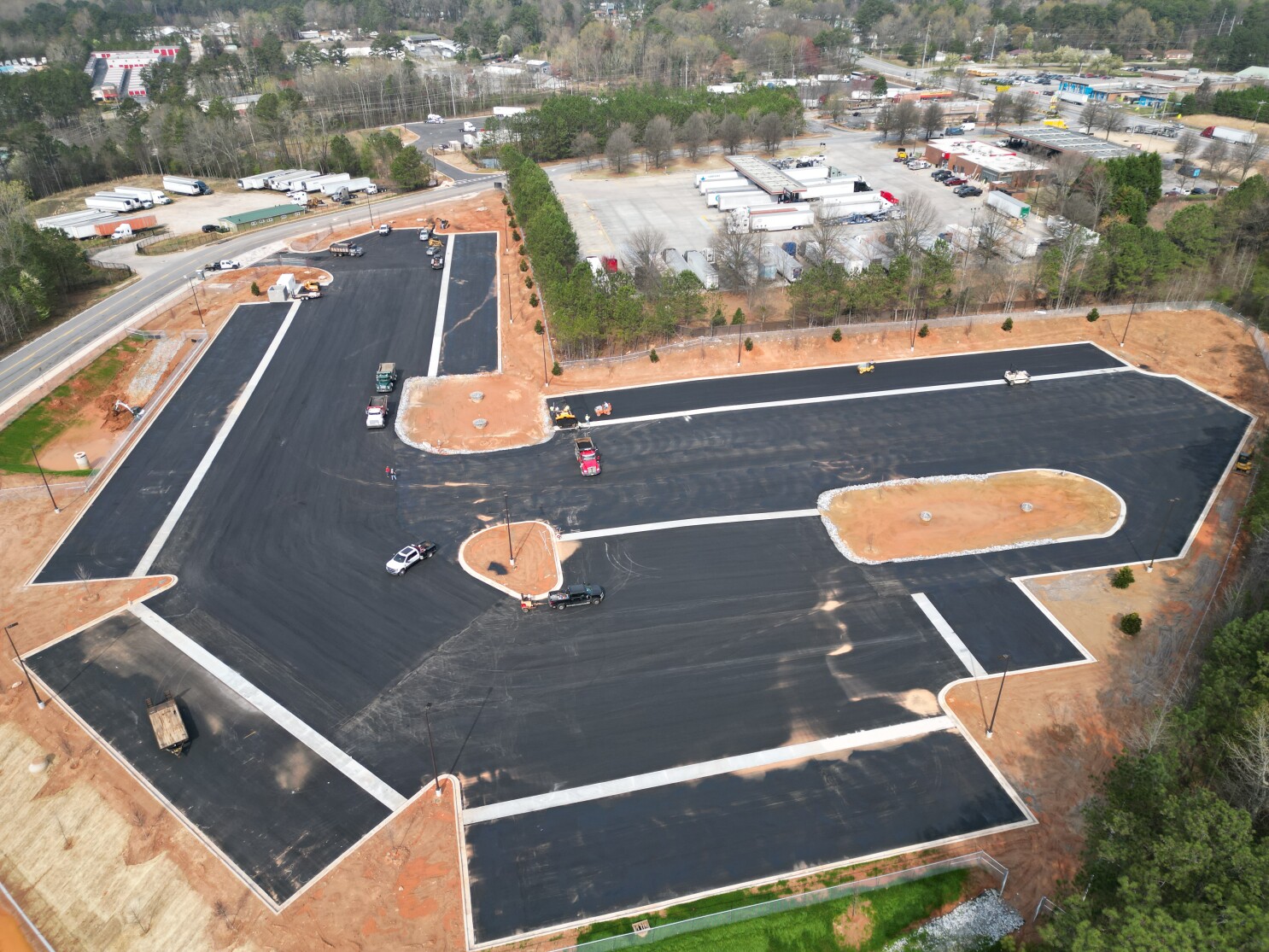
Scope Overview
Turnkey delivery for Stabilized Lots and Laydown Yards
We self-perform concrete and stabilized-base laydown yards built for high axle loads, constant traffic, and all-weather operation in active industrial environments.
What Is Included
Subgrade investigation and stabilization design inputs
Lime/cement treatment planning and dosage control
Equipment circulation planning and geometry
Surface drainage and erosion mitigation
Geogrid and geotextile integration where required
Heavy-load performance verification testing
Phased construction for active yards
Turnover package with maintenance recommendations
Typical Project Scenarios
- Fleet operator needing trailer laydown capacity before full paving
- Industrial campus requiring durable temporary operations surfaces
- Logistics site with poor native soils and rutting history
- Construction megasite needing staged material yards by phase
Detailed Scope Narrative
Stabilized Lots and Laydown Yards concrete scope in Dallas-Fort Worth is usually bid by industrial operators and developers needing reliable all-weather staging and fleet surfaces who need a self-performing concrete contractor to bridge preconstruction and field delivery. Search intent for phrases like "stabilized laydown yard contractor Dallas" and "lime stabilized lot construction DFW" usually comes from teams comparing risk, speed, and total cost rather than lowest bid line items. We self-perform the concrete package with one crew, one schedule baseline, and one point of contact, and we coordinate directly with the project's general contractor from early due diligence through final turnover.
Preconstruction performance is where these projects are won or lost. For stabilized lots and laydown yards, we build an executable plan around CBR target definition, geotechnical review, stabilization mix strategy, drainage slope design, and vehicle circulation modeling. That means aligning design assumptions with jurisdictional realities in Dallas, Fort Worth, and surrounding North Texas municipalities, then converting those assumptions into procurement milestones and field-ready work packages before crews mobilize.
Field execution is controlled through disciplined production planning, not ad hoc reactions. Our concrete crews run lime or cement treatment, reconditioning passes, geosynthetic integration where required, and heavy-duty surface preparation. We coordinate interdependencies with the general contractor's civil, structural, MEP, and envelope trades so our workfront stays open and the schedule's critical-path activities do not stall.
Many owners cannot shut down operations to build. We therefore engineer our pour plans around operational sequencing that maintains truck movement and material access while stabilization progresses in controlled sections. This is especially important for active assets that must preserve safety, access, occupancy commitments, and operational continuity while construction continues in adjacent zones.
Quality and risk control are managed as active systems from day one through closeout. We implement mix-rate verification, moisture/density testing, proof-load checks, and drainage tolerance validation. That framework improves schedule predictability, reduces rework, and gives owners and the general contractor a defensible record of what was built, when it was built, and how acceptance criteria were met.
At turnover, the goal is operational readiness instead of cosmetic completion. Each project includes test records, maintenance guidance, as-built grades, and turnover documentation for operations teams. Owners and general contractors receive a complete package that supports occupancy, warranty administration, facility operations, and long-range capital planning across Dallas-Fort Worth portfolios.
Common Questions
Frequently Asked Questions
- How is scope defined for stabilized lots and laydown yards in Dallas-Fort Worth?
- Scope is locked through preconstruction deliverables tied to schedule and permitting logic. We structure it around CBR target definition, geotechnical review, stabilization mix strategy, drainage slope design, and vehicle circulation modeling, then confirm scope boundaries by package so owners can price and sequence with fewer change-order surprises.
- Can stabilized lots and laydown yards be phased around active operations?
- Yes. We build phase plans around operational sequencing that maintains truck movement and material access while stabilization progresses in controlled sections. The objective is to maintain safe business continuity while preserving inspection flow and predictable production output.
- What quality controls matter most on stabilized lots and laydown yards projects?
- The highest-value controls are defined hold points, testing/inspection alignment, and documentation discipline. We manage this through mix-rate verification, moisture/density testing, proof-load checks, and drainage tolerance validation so acceptance criteria are clear before turnover.
- What does closeout include for stabilized lots and laydown yards?
- Closeout includes test records, maintenance guidance, as-built grades, and turnover documentation for operations teams. That package supports occupancy decisions, lender reporting, and long-term facility maintenance without missing records.