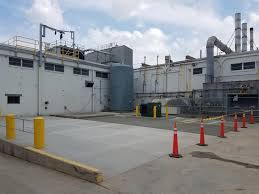
Scope Overview
Turnkey delivery for HVAC Coordination
We pour the pads, trenches, and penetrations mechanical work depends on, coordinating directly with the HVAC subcontractor or mechanical engineer of record so equipment dimensions match what gets poured the first time.
What Is Included
Housekeeping pads and equipment slabs sized to manufacturer specs
Rooftop unit and condenser pad anchor bolt coordination
Trenching and backfill for refrigerant and condensate lines
Core-drilling for mechanical penetrations on retrofits
Coordination with mechanical engineer of record
Shutdown-window coordination on occupied buildings
Site grading around mechanical yard equipment
Documentation for mechanical rough-in sequencing
Typical Project Scenarios
- General contractor needing HVAC pads poured ahead of a mechanical subcontractor's mobilization date
- Property manager replacing a rooftop unit that needs a resized housekeeping pad
- Tenant improvement project requiring core-drilled penetrations for new mechanical rough-in
- Manufacturing facility needing trenching for refrigerant lines to a new production line
Detailed Scope Narrative
Every commercial concrete pour touches HVAC somewhere, whether it's a housekeeping pad for a rooftop unit, a trench for refrigerant lines, or an equipment slab sized to a specific condenser footprint. Rather than making a general contractor track down a separate mechanical sub for every concrete-adjacent HVAC touchpoint, we coordinate HVAC scopes directly alongside our own concrete work, acting as the single point of contact for the pads, trenches, and penetrations that mechanical trades depend on.
Housekeeping pads and equipment slabs are the most frequent request, sized and reinforced to the manufacturer's cut sheet for rooftop units, condensers, and package units. Getting the pad dimensions, anchor bolt pattern, and elevation right the first time avoids a costly rework cycle once the mechanical contractor shows up with equipment that doesn't match what got poured. We pull equipment specs before we form the pad, not after, and we coordinate directly with the HVAC subcontractor or the general contractor's mechanical engineer of record on final dimensions.
Underground work includes trenching and backfill for refrigerant lines, condensate drainage, and duct penetrations through slabs, sequenced so mechanical rough-in can proceed without waiting on a separate excavation sub to mobilize. On tenant improvement and retrofit projects, that often means core-drilling through existing slabs for new mechanical penetrations, patching around curb adapters, and coordinating shutdown windows with building management so occupied space isn't affected.
We don't install ductwork or set mechanical equipment ourselves, that stays with the licensed HVAC subcontractor, but we manage the concrete and site scope that mechanical work depends on and keep it moving in lockstep with the general contractor's overall mechanical rough-in schedule, so pads, trenches, and penetrations are ready exactly when the mechanical crew needs them and not a week behind.
Rooftop equipment replacement on existing buildings is its own category of coordination, common across Dallas-Fort Worth's aging office and retail stock. A condenser swap that looks simple on paper often turns up a housekeeping pad that doesn't match the new unit's footprint or anchor pattern, and that mismatch surfaces on the day the crane is already scheduled. We try to catch that gap during a site walk before equipment gets ordered, not after it arrives on a flatbed with no pad ready to receive it.
Manufacturing and process facilities add another layer, since HVAC and process cooling frequently share trenching corridors with compressed air, process water, and electrical conduit. We map the full underground utility corridor before trenching for any single trade's line, so a refrigerant trench doesn't get opened twice because it wasn't coordinated with the electrical rough-in running the same path six inches away.
Common Questions
Frequently Asked Questions
- Do you install HVAC equipment?
- No, HVAC equipment installation stays with a licensed mechanical subcontractor. We handle the concrete scope HVAC work depends on: pads, trenches, penetrations, and site coordination, so the mechanical crew isn't waiting on us to mobilize.
- Can you size a housekeeping pad to our equipment cut sheet?
- Yes. We pull manufacturer specs before forming the pad and coordinate anchor bolt patterns and elevation with the mechanical contractor to avoid rework.
- Do you core-drill for mechanical penetrations on retrofit projects?
- Yes. We core-drill existing slabs for refrigerant lines, condensate drainage, and duct penetrations, and coordinate shutdown windows with building management on occupied buildings.
- Who do you coordinate HVAC pad work with?
- We work directly with the general contractor's mechanical engineer of record or the HVAC subcontractor to confirm equipment dimensions before we pour, so the pad matches the equipment the first time.